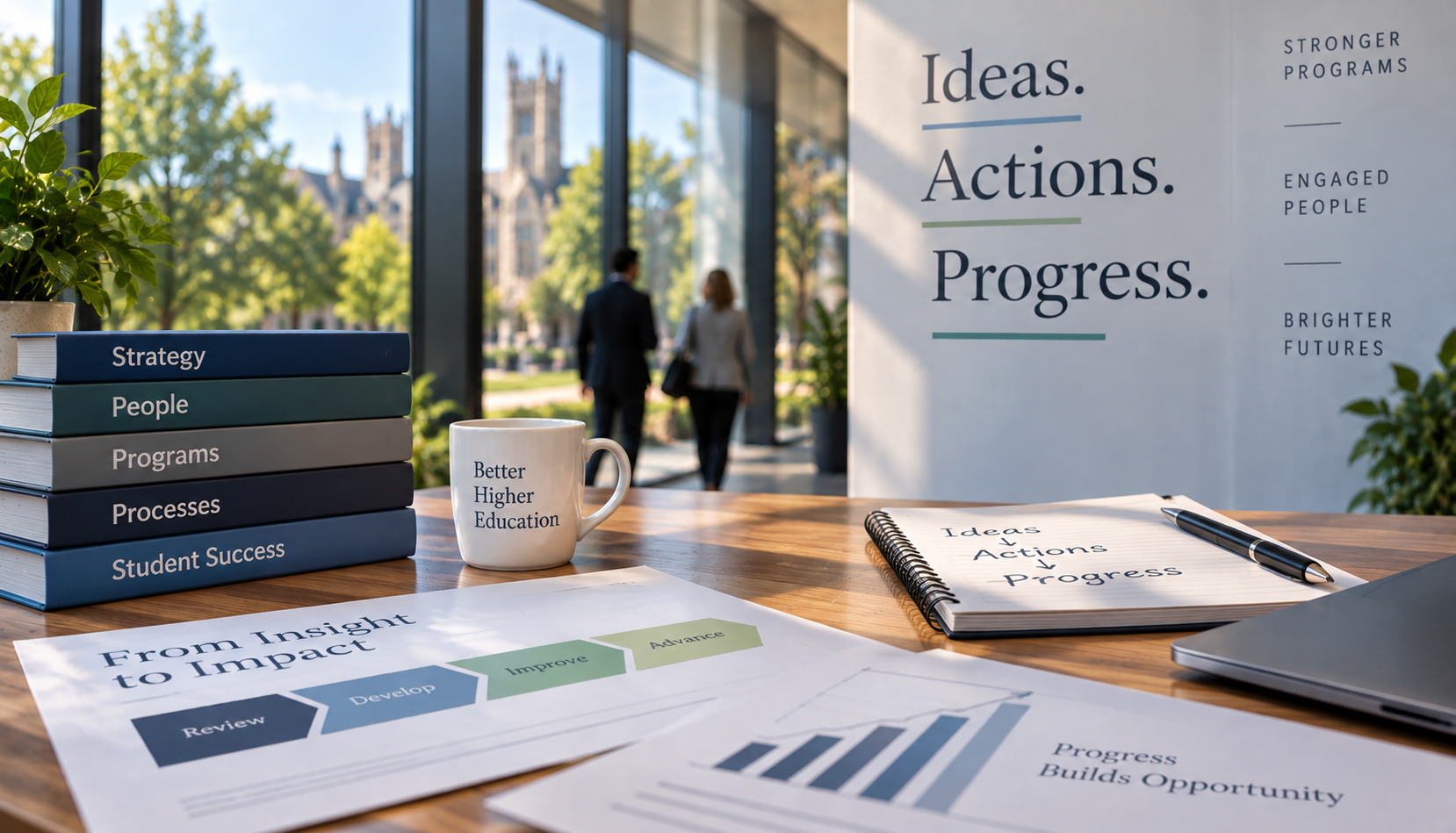
When Is It Time to Rethink an Academic Program?
When Is It Time to Rethink an Academic Program?
Academic programs should evolve before they become outdated. Regular program review can help institutions identify changing student needs, strengthen curriculum, respond to workforce trends, and ensure programs continue to support institutional priorities.
Academic programs are among an institution's most important and enduring commitments. They shape the student experience, influence institutional identity, connect education with the workforce, and require significant investments of faculty time and institutional resources.
Yet the environment around those programs does not remain static.
Student expectations change. Industries evolve. New technologies reshape professional practice. Institutional priorities shift. New delivery models emerge, and knowledge within disciplines continues to develop.
The question for institutional leaders is therefore not simply whether an academic program is currently functioning.
A more useful question is: Does the program remain relevant, coherent, distinctive, and positioned for the future?
Academic Program Review as Continuous Improvement
Program review is sometimes approached as a periodic requirement: a process that takes place at a scheduled interval, produces a report, identifies recommendations, and then concludes.
A stronger approach treats academic program review as part of continuous institutional improvement.
This means looking beyond whether a program is simply operating as intended. Institutions can use review to understand how a program is performing, where it may be losing relevance, what opportunities are emerging, and which improvements deserve priority.
Data-informed academic portfolio approaches increasingly consider multiple indicators—including student demand, labor-market trends, program performance, competitive positioning, and institutional priorities—rather than relying on a single measure of success.
Five Signs It May Be Time to Review an Academic Program
Student Demand Is Changing
Changes in enrollment, student interests, learning preferences, or delivery expectations may indicate that a program needs closer examination. The issue may not always be the subject itself—it may be how the program is structured, positioned, communicated, or delivered.
Workforce Needs Have Evolved
Industries and occupations evolve continuously. Programs should periodically consider whether the knowledge, skills, and capabilities students develop remain connected to emerging professional and workforce expectations.
The Curriculum Has Become Fragmented
Individual courses may be strong while the overall program has gradually lost coherence. A review can reveal duplication, gaps, weak sequencing, or unclear connections between courses, learning outcomes, and the intended graduate experience.
Outcomes & Assessment Need Attention
Learning outcomes should clearly communicate what graduates are expected to know and be able to do. When outcomes, curriculum, and assessment no longer align clearly, program review creates an opportunity to reconnect them.
Institutional Priorities Have Shifted
A program may continue to perform adequately while becoming less aligned with the institution's broader strategy, identity, growth priorities, or areas of academic distinction. Strategic alignment should therefore be part of program review.
Look Beyond Enrollment Numbers
Enrollment is important, but it should rarely be the only indicator used to evaluate the health or future potential of an academic program.
A program with declining enrollment may still serve an important institutional purpose. Conversely, a program with healthy enrollment may contain curriculum gaps or face emerging changes in its professional environment.
Effective academic program review therefore brings together different forms of evidence and institutional judgment.
A broader review may consider:
- Enrollment and student demand
- Student progression and outcomes
- Curriculum structure and coherence
- Program and course learning outcomes
- Workforce and industry developments
- Faculty perspectives and expertise
- Student and stakeholder feedback
- Comparable and competing programs
- Emerging technologies and disciplinary change
- Institutional strategy and priorities
No single indicator provides the complete picture. The value comes from examining the evidence together and understanding what it means within the institution's particular context.
Workforce Alignment Without Chasing Every Trend
Workforce relevance has become an increasingly important consideration in academic program development and review.
Current labor-market analysis shows why institutions need to pay attention to changing employer demand, emerging occupations, and the skills expected of graduates.
But workforce alignment should not mean redesigning a curriculum every time a new trend appears.
The objective is to understand which developments represent meaningful, longer-term changes and determine how they relate to the purpose of the program.
Institutions can then consider whether new capabilities should be integrated into existing courses, whether curriculum sequencing should change, whether new learning experiences are needed, or whether the program itself requires more substantial redesign.
Program Review Should Lead to Action
The value of academic program review is not the review itself.
Its value lies in what the institution is able to understand and improve as a result.
A useful review should help institutional and academic leaders distinguish between what is working well, what requires attention, and what should happen next.
Some findings may require substantial curriculum redesign. Others may lead to relatively focused improvements—a revised course sequence, clearer learning outcomes, updated content, stronger faculty development, new industry engagement, or improved documentation of existing practices.
The important step is converting findings into priorities, actions, responsibilities, and visible progress.
Not Every Program Needs to Be Reinvented
Rethinking an academic program does not necessarily mean replacing it.
In many cases, the strongest outcome of a program review is greater clarity about what should remain, what should change, and what should receive greater attention.
A mature academic program may need targeted enhancement rather than wholesale redesign. A newer program may need better alignment between courses. Another may need stronger connections with industry, clearer differentiation, or more effective communication of its value to students.
The goal is not change for the sake of change.
It is to ensure that academic programs continue to deliver meaningful value to students, institutions, and the communities and professions they serve.
A Question for Academic Leaders
Instead of asking only “Is this program performing?” consider asking:
If we were designing this program for the students and world of tomorrow, what would we keep—and what would we change?Review Before Change Becomes Urgent
The strongest time to examine an academic program is not necessarily when enrollment has fallen significantly or when external pressures force action.
Regular, thoughtful review gives institutions an opportunity to identify change earlier, strengthen what is already working, and make more deliberate decisions about where to invest attention and resources.
Academic programs do not remain strong simply because they were designed well initially.
They remain strong because institutions continue to review, learn, improve, and adapt.
References
Hanover Research. (2024, November 1). Data-informed academic portfolio review in higher ed. Hanover Research .
Hanover Research. (2024, October 16). Academic program development handbook for higher education. Hanover Research .
Hanover Research. (2026, August 31). 9 key findings in hiring trends for H1 2026. Hanover Research .
Quality Matters. (n.d.). Course reviews. Quality Matters .
Is It Time to Review an Academic Program?
Riveral Advisory helps higher education institutions review, develop, and enhance academic programs with a focus on relevance, coherence, quality, and long-term institutional value.
Start a ConversationRelated posts
-
Are We Offering the Right TVET Courses?Academic Programs 15 October 2026